Work / Mitra
Mitra
Running our family’s week since February 2026 · Opening to other households soon
A personal assistant for a family. It looks after our calendars, tasks, reminders and mail, and it lives where we already talk: WhatsApp.
Most assistants are built for one person and wait to be asked. A household is different. Plans involve several people, a school email means someone has to do something by Friday, and “remind Sam” only works if the assistant knows who Sam is. I wanted one shared system that knows the people, how they’re related, and the tools around them.
One place for the day
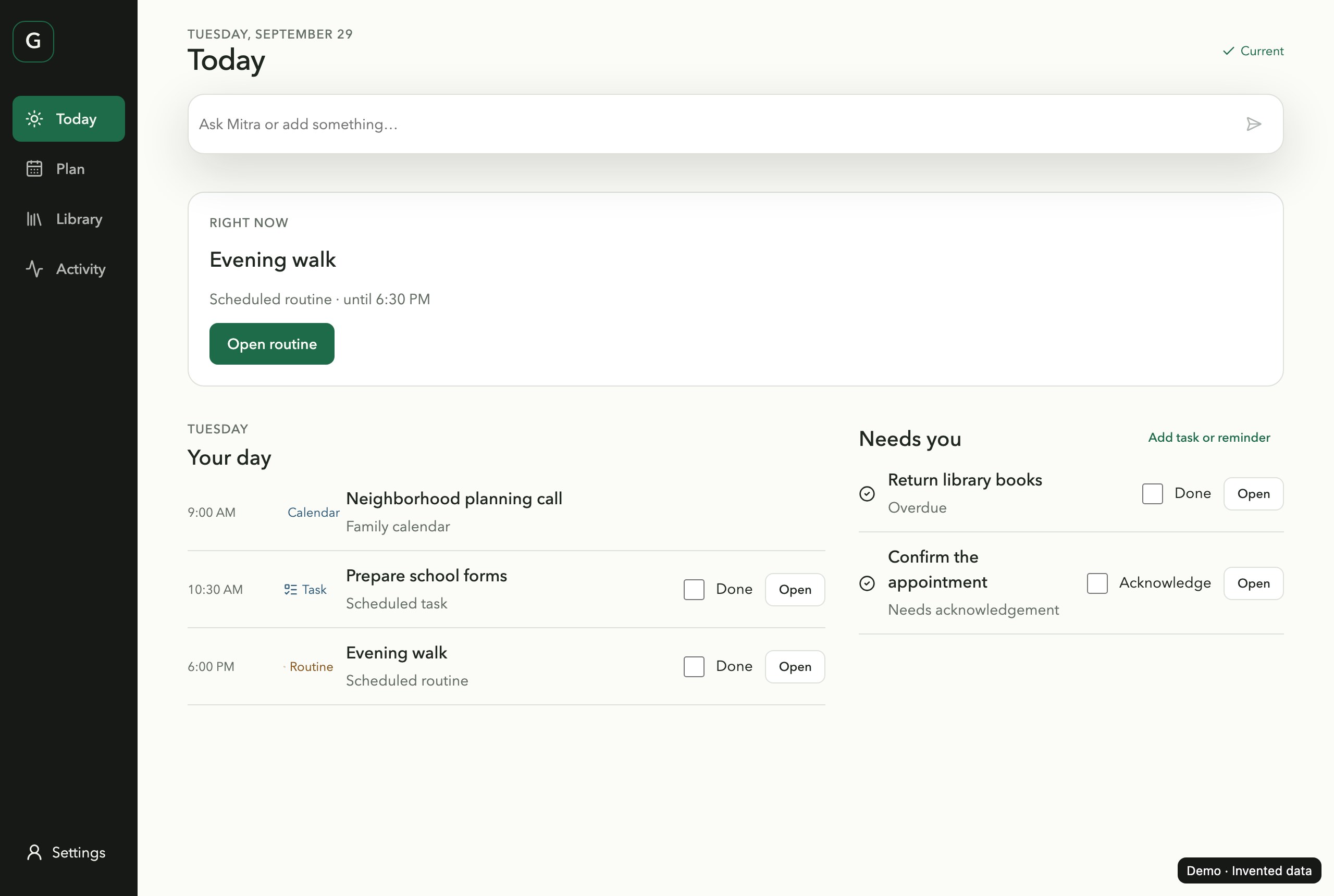
Today pulls everything together: calendar events from everyone’s Google calendars, tasks Mitra has scheduled into free time, routines, and reminders. It also shows the few things that actually need you, like an overdue task or a permission slip nobody has signed yet.
On WhatsApp, for everyone
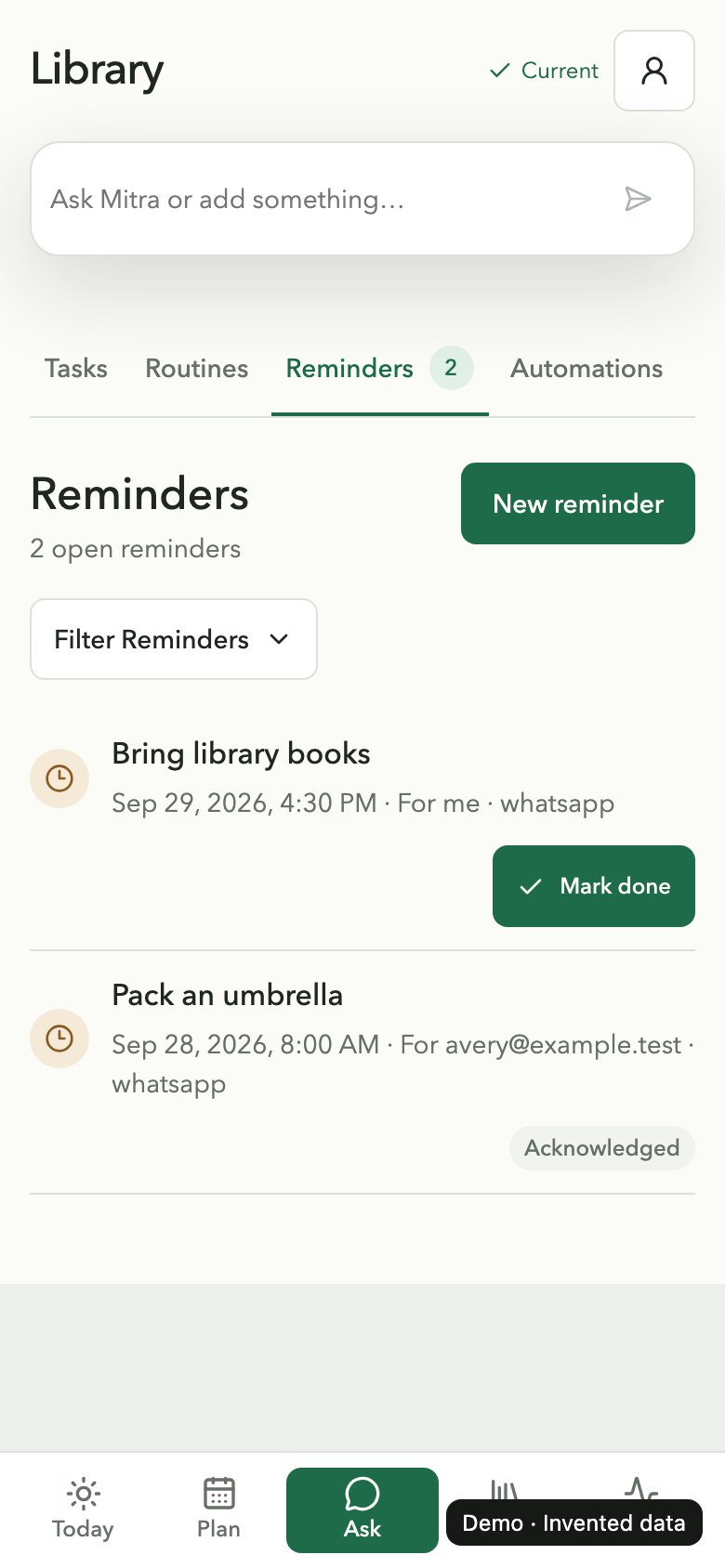
Most of the time nobody opens the app. Mitra sends a short morning brief, takes requests in plain language, delivers reminders to whichever family member they’re for, and keeps nudging until they’re acknowledged. It can even answer “which card should I use?” by asking Kubera.
Good morning, Alex. Thursday: standup at 9:00, Maya’s dentist at 12:15, Leo’s practice at 3:00, and dinner with Grandma Ruth at 6:30. The field trip slip still needs signing.
Remind Sam to pack Leo’s cleats at 2:30
Done. I’ll message Sam at 2:30 PM.
Which card at Whole Foods?
Chase Amazon Prime: 5% back there. None of your other cards come close.
A week that plans itself
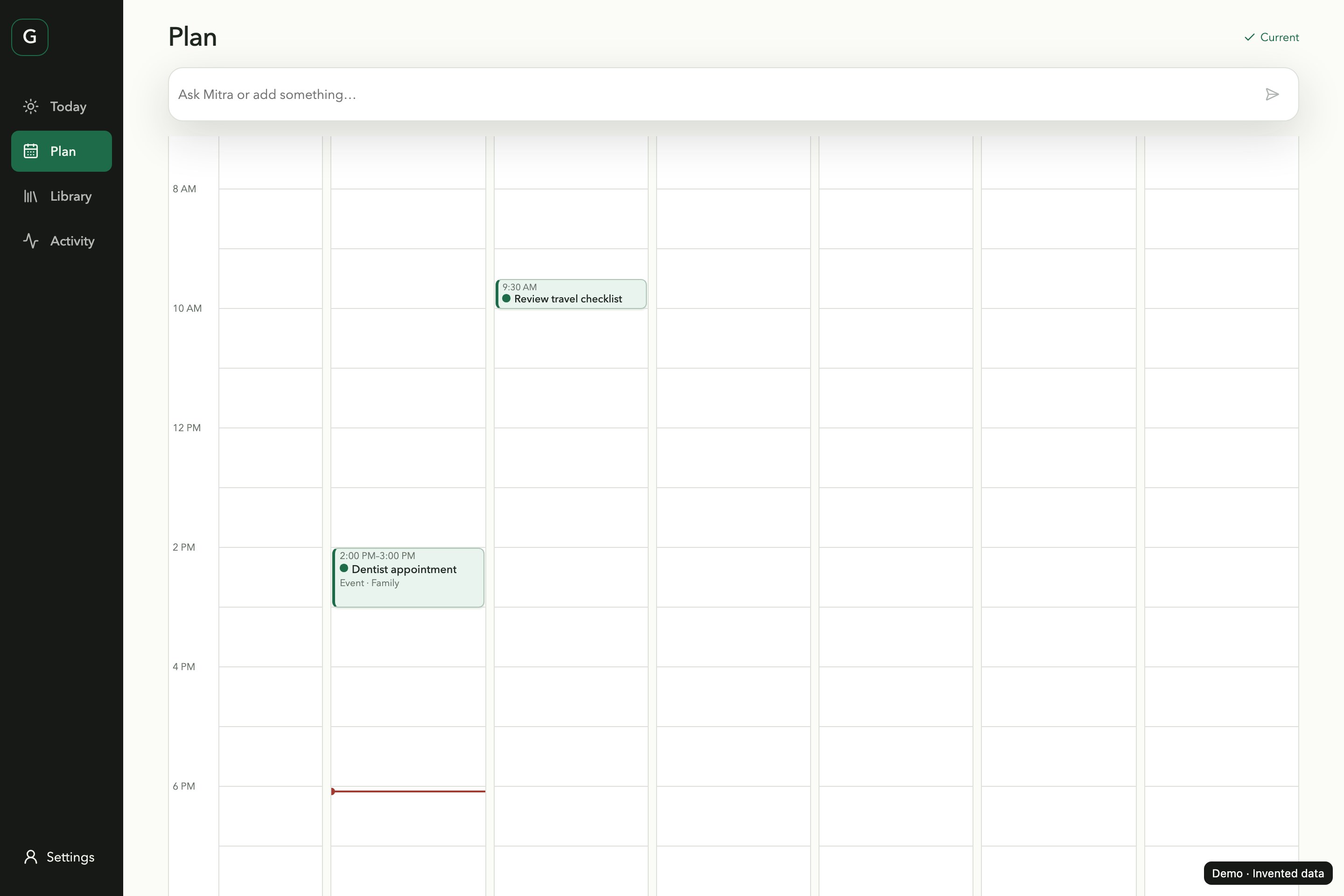
Tasks and routines don’t just sit in a list. Mitra fits them into the gaps between everyone’s events, writes them to Google Calendar, and moves them when the day changes.
Automations written in plain English
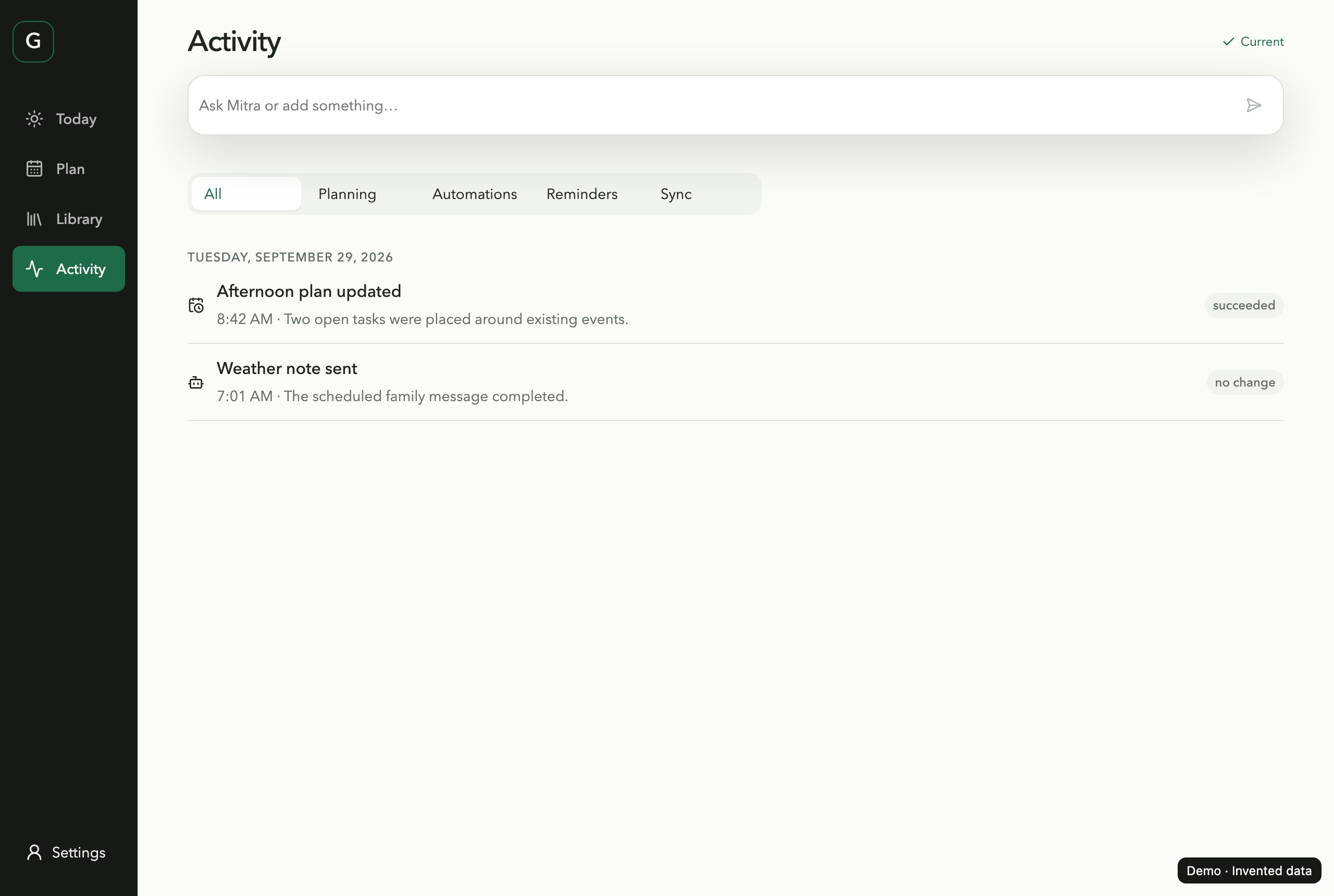
“When the school newsletter arrives, find the dates we need to act on and remind us the evening before.” Automations can start from a time, an email, a calendar change, a task or a WhatsApp message. They’re written the way you’d brief a person.
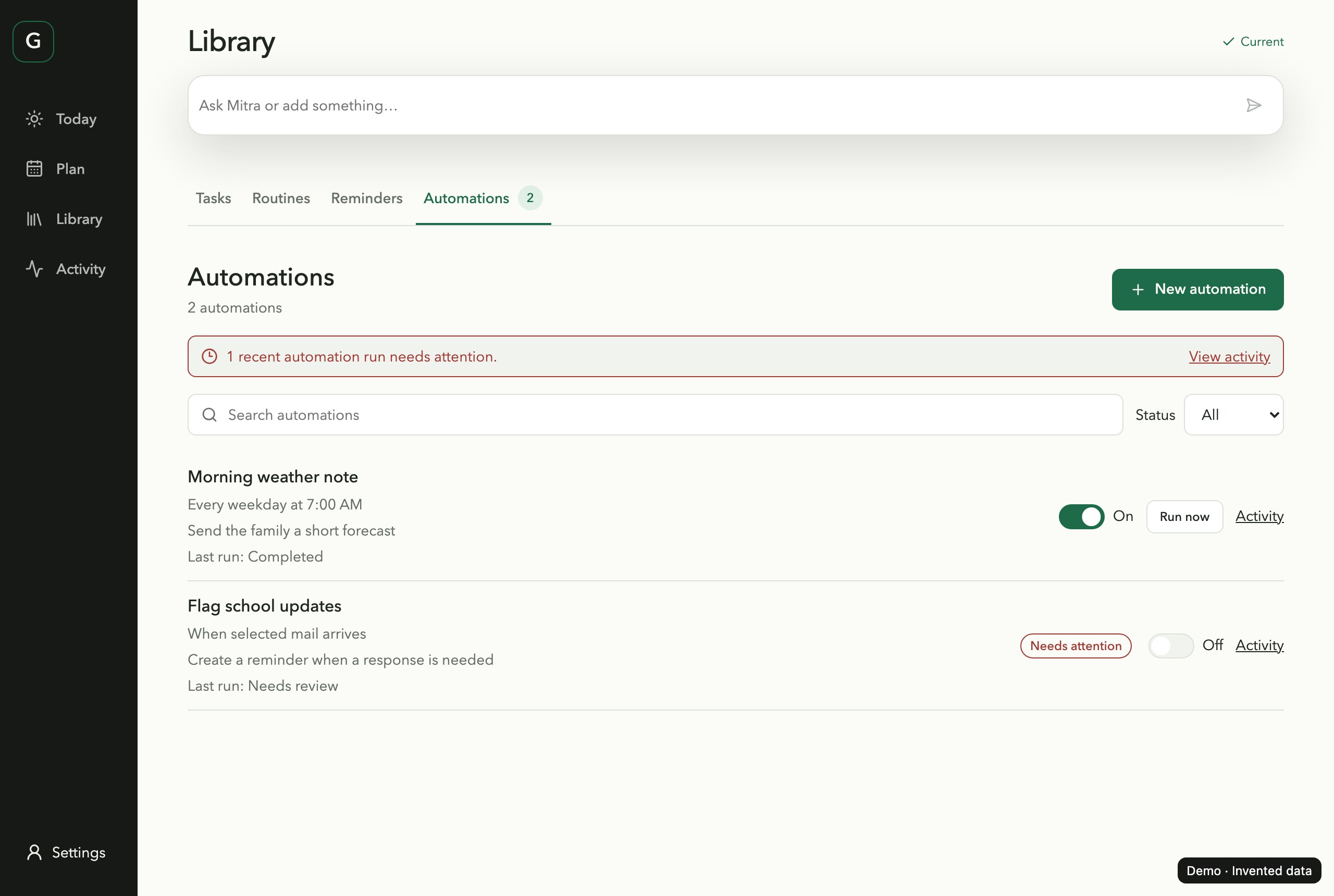
Every run leaves a record. When something is ambiguous, like a coach’s email with two different start times, Mitra stops and asks instead of guessing.
It knows the household
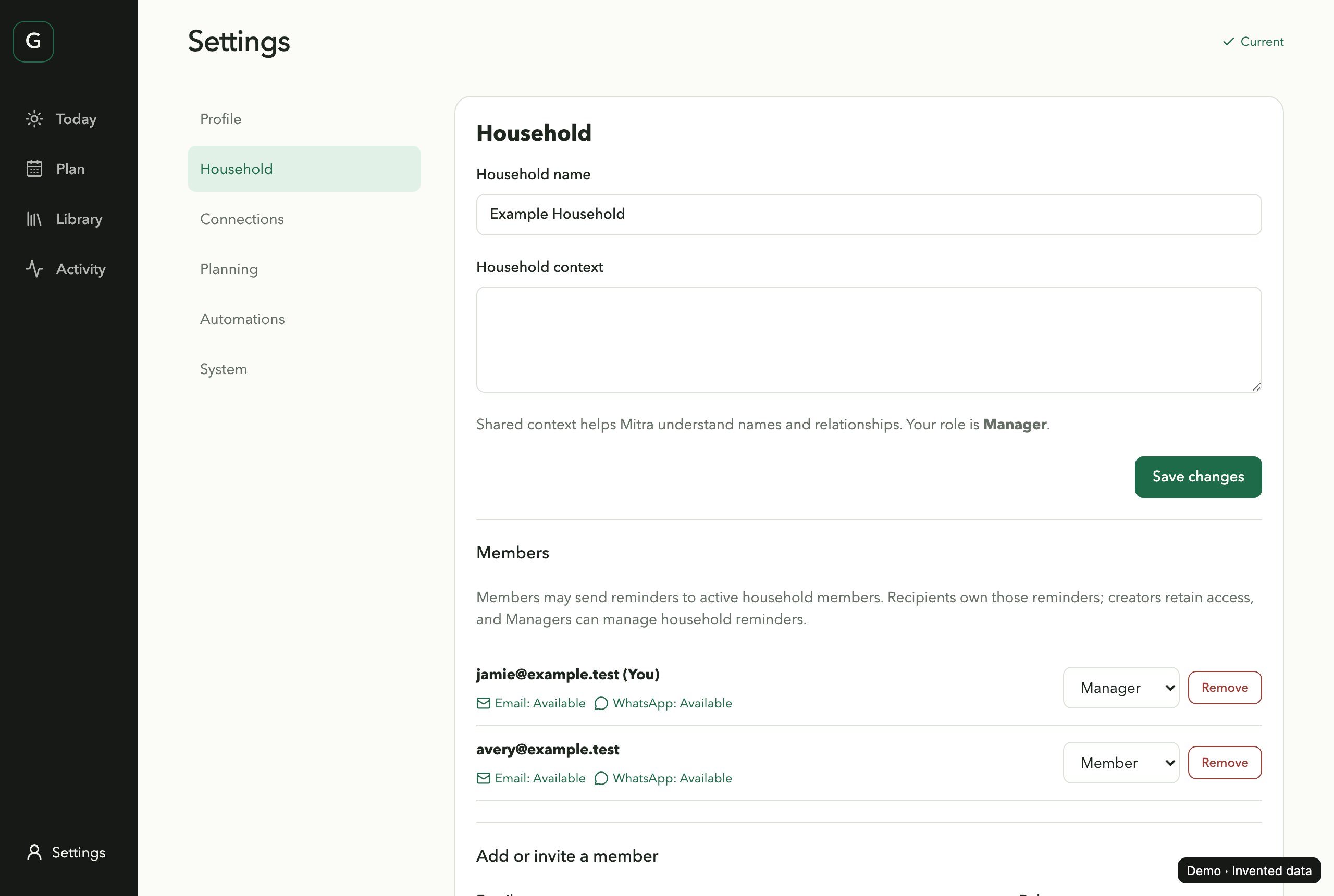
A few sentences of shared context (who the kids are, which school, when soccer is, who Grandma Ruth is) make every request shorter. Household members have roles and can send reminders to each other.
Under the hood
- A local mirror of Google. A background worker syncs Calendar, Gmail and Tasks into Mitra’s own database, so the app is fast and the planner can reason about the whole family’s time.
- One agent, two voices. The same tool-using agent handles live chat and background automations. Automations end by either sending a message or deliberately doing nothing, so they stay quiet unless there’s something worth saying.
- Models where they fit. Claude handles conversation and automations. A smaller model routes requests and formats notifications. Voice notes are transcribed by a local speech service.
- Plain parts. FastAPI and SQLite, a React web app, and a WhatsApp gateway, all running as a few containers alongside my other projects.
Everything shown uses invented demo data. The WhatsApp conversation is an illustration. Mitra will open to other households soon.