Work / Kubera
Kubera
Current version in daily use by my family since April 2026 · Opening to other households soon
A credit-card reward tool for a household. It answers one small question quickly: “Which card should I use here?”
Card rewards are easy to understand one card at a time and tedious across five. Points are worth different amounts, merchants belong to several categories at once, and monthly credits expire quietly. I was doing that arithmetic in my head at checkout, so I wrote it down once.
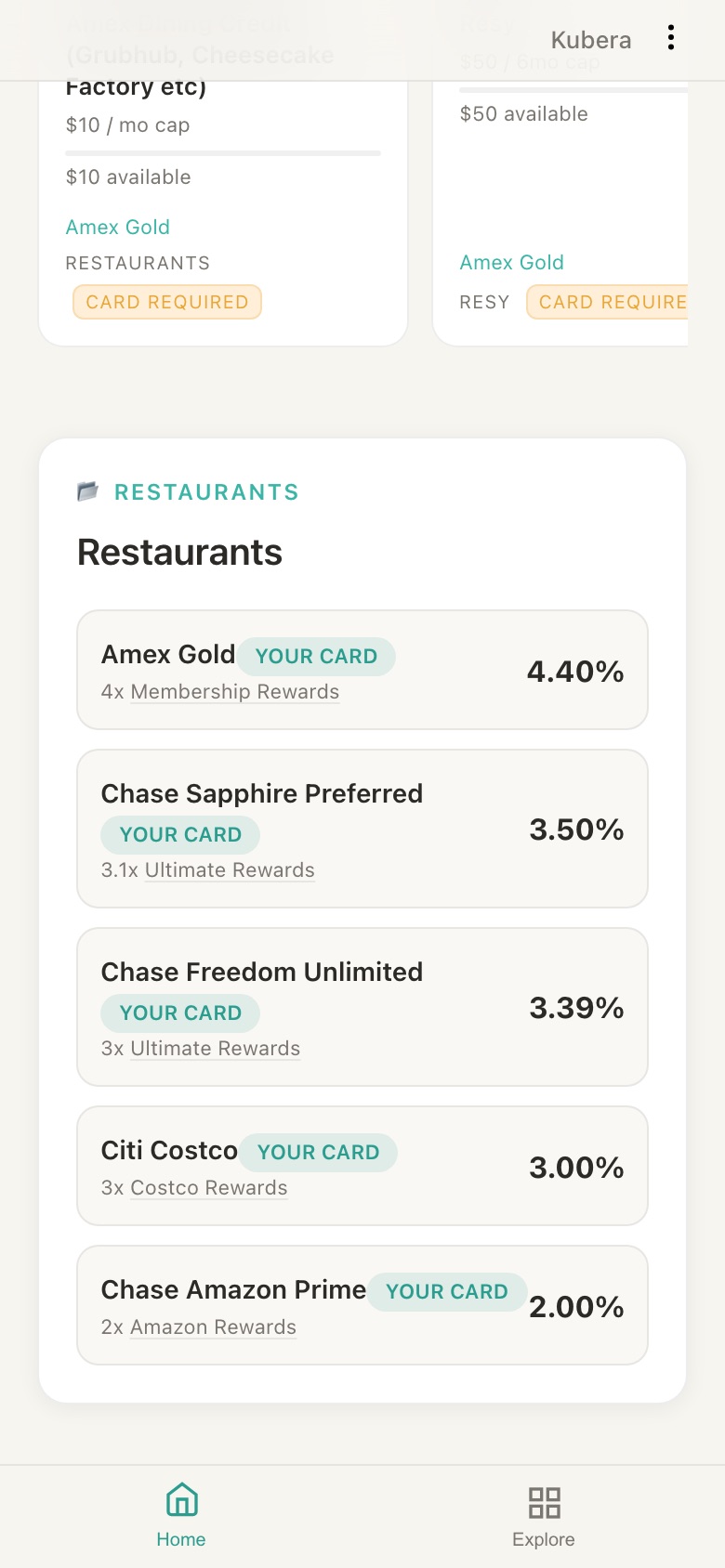
Ask about a place, not a category
Type “restaurants”, “Costco” or “Whole Foods”. Kubera knows which categories a merchant belongs to and which cards earn where, and it values each program’s points instead of comparing raw multipliers. A 4× on one card and a 3× on another stop being guesses and become 4.4% and 3.5%.
It also surfaces credits that apply to the purchase, like a monthly dining credit you haven’t used yet.
The wallet, at a glance
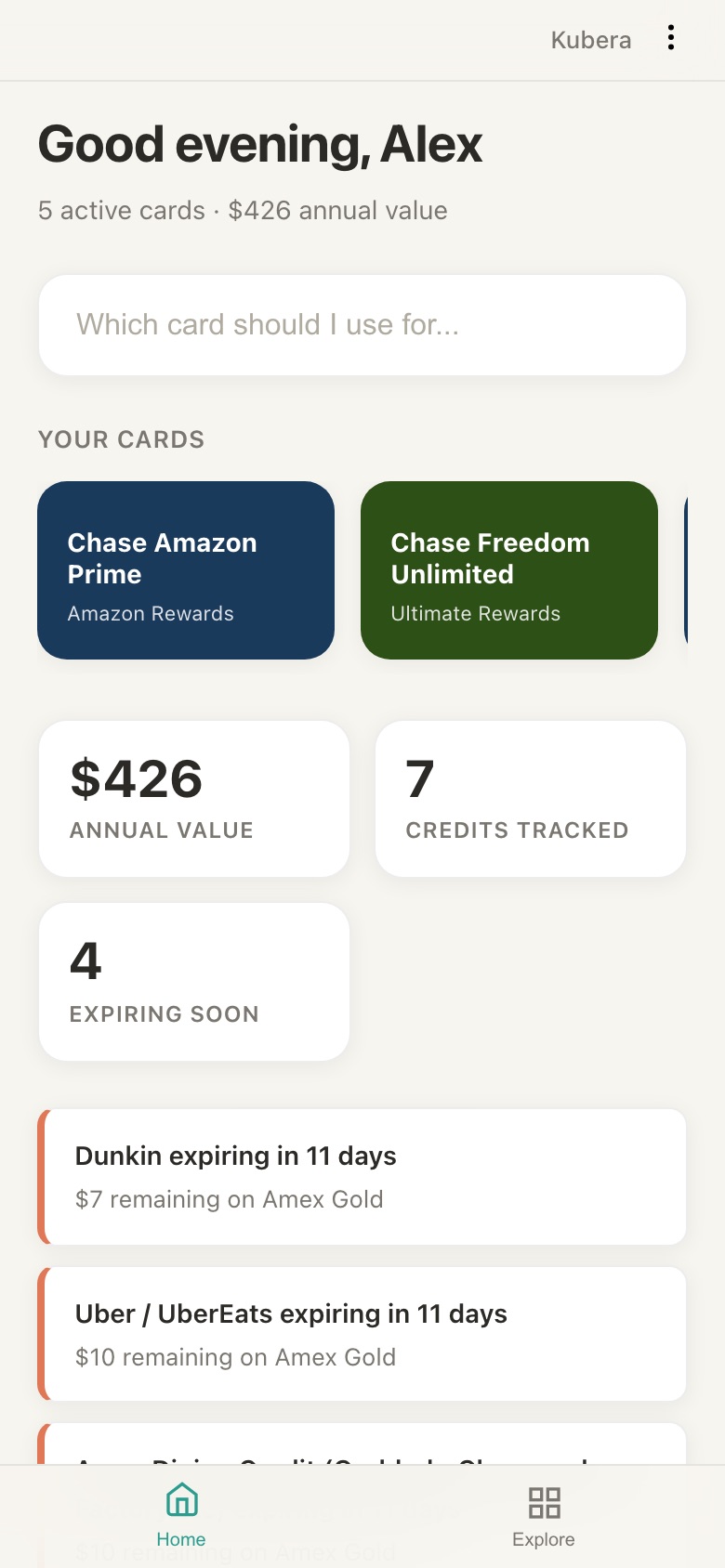
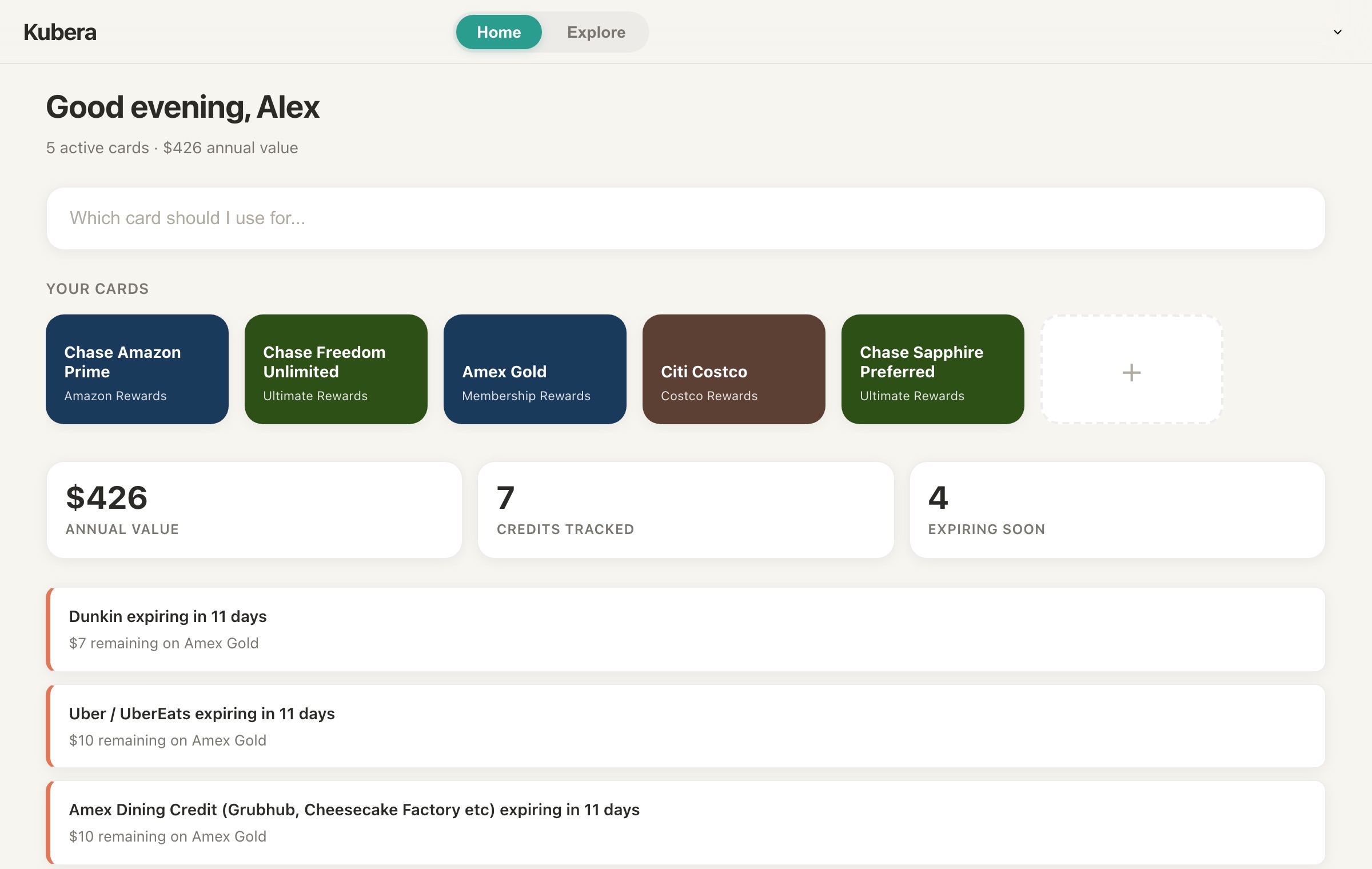
The home screen is the whole household’s wallet: which cards are active, what they are worth together after fees, and which credits are about to lapse this month.
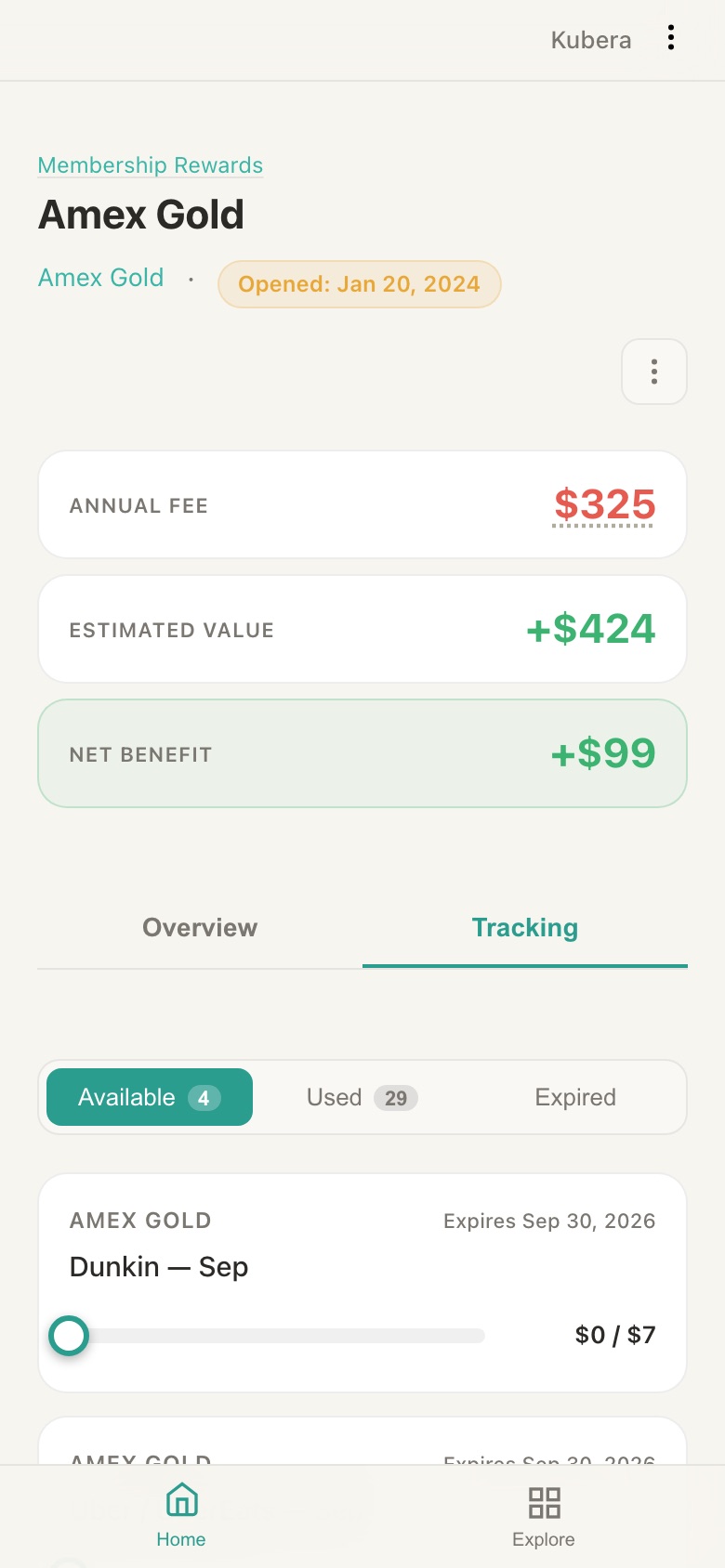
Is this card worth its fee?
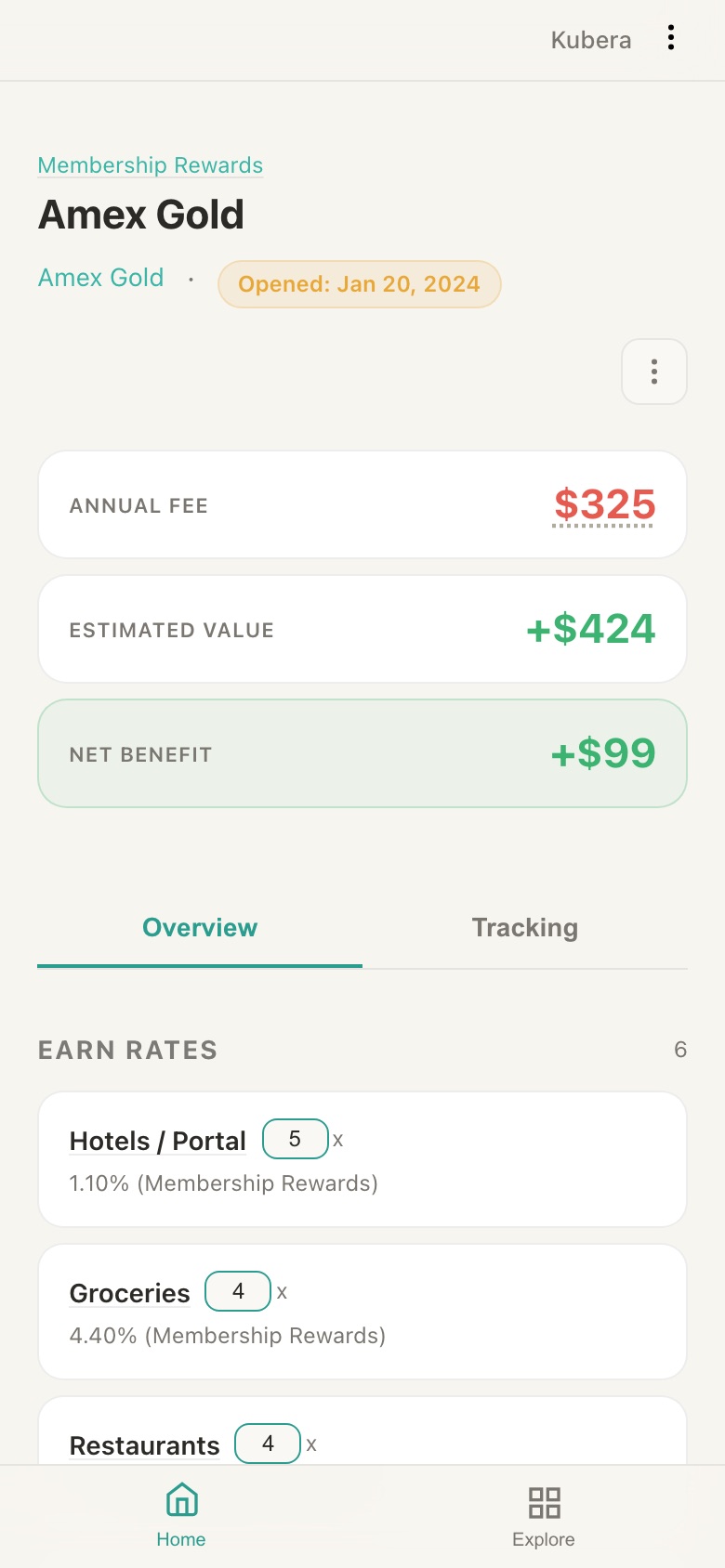
Every card shows its annual fee next to the value it actually returned: credits used, perks you care about, and your own estimates where the default doesn’t fit. The tracking tab keeps the monthly and half-yearly credits honest.
A few years of history
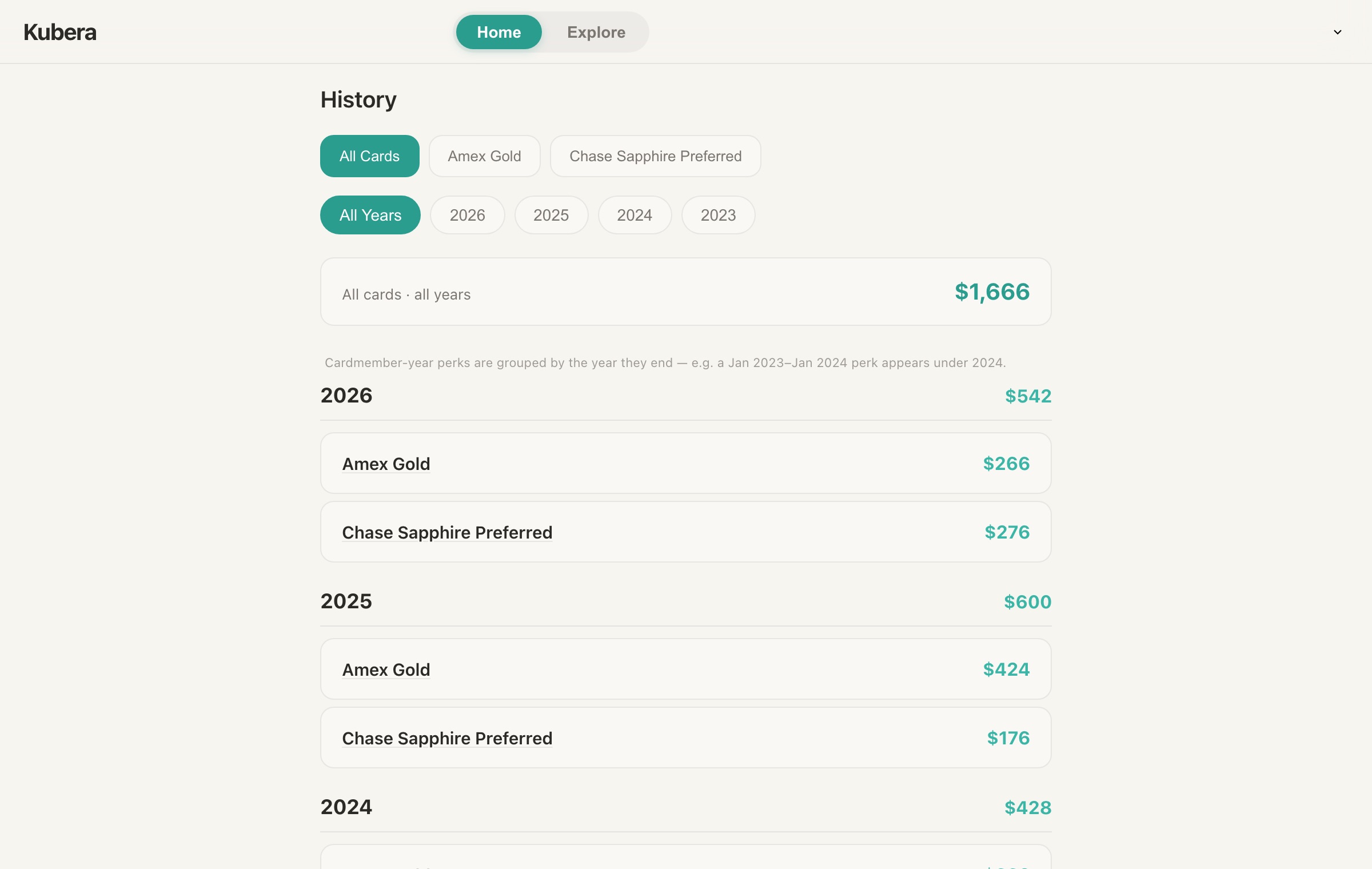
Over time it becomes a record of what each card really gave back, year by year, which is the number I want when a renewal fee arrives.
Under the hood
- A reward engine, not a lookup table. Merchants and categories form a graph, so Whole Foods inherits from Groceries. Point values follow transfer chains between programs. Each purchase is priced by every route it could take, and the best one wins.
- Built for a household. People share one wallet and can override a card’s fee or a program’s valuation without changing anyone else’s defaults.
- Also on WhatsApp. Mitra, our family assistant, asks Kubera the same question through a small internal API, so the answer is a message away.
- Plain parts. React and Vite on the front, Express, Prisma and PostgreSQL behind it, all in three Docker containers.
Screenshots and the recording use a demo household with sample cards and made-up usage. Kubera will open to other households soon.